
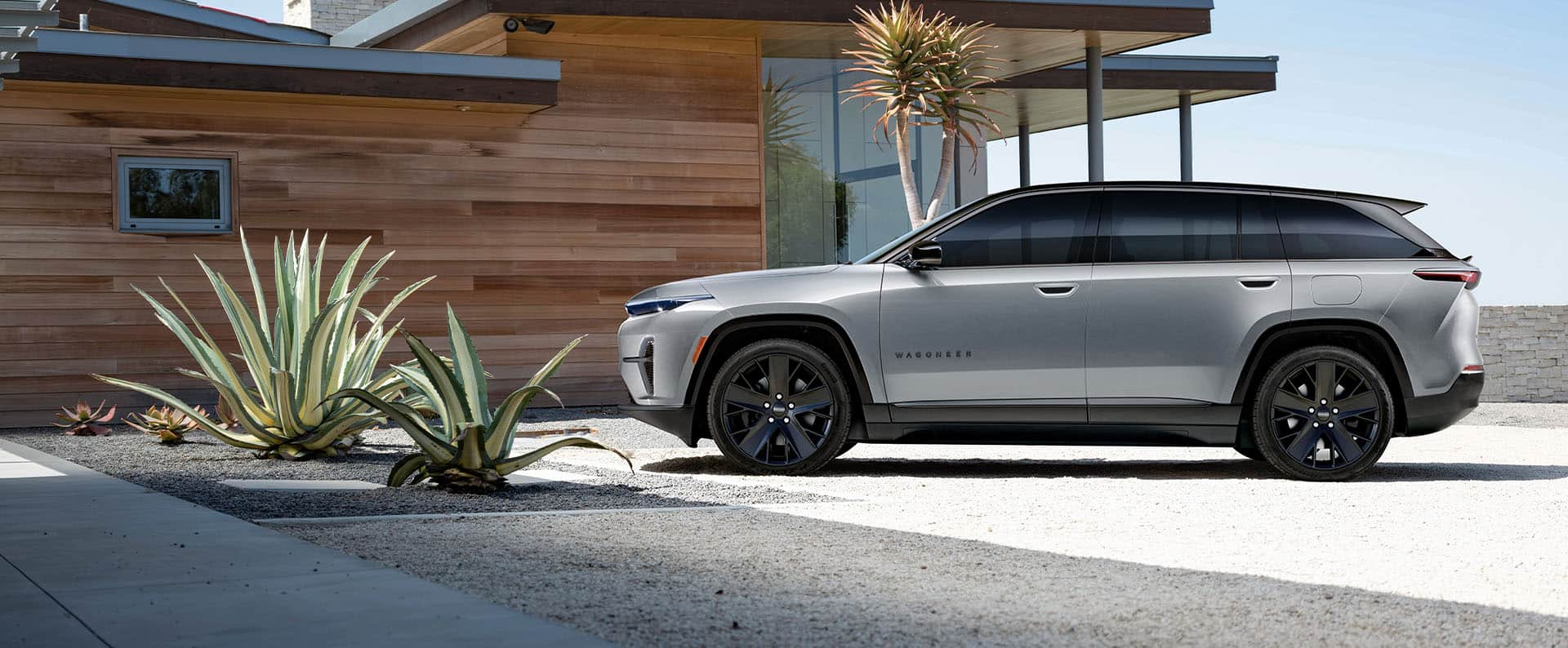
THE ALL-NEW WAGONEER S
,
JEEP® BRAND ELECTRIFICATION
INNOVATIONS ON ADVENTURE
Jeep® Brand Battery Electric vehicles are redefining the meaning of adventure. Explore the groundbreaking technologies and valuable EV incentives—all designed to amplify on- and off-road journeys.
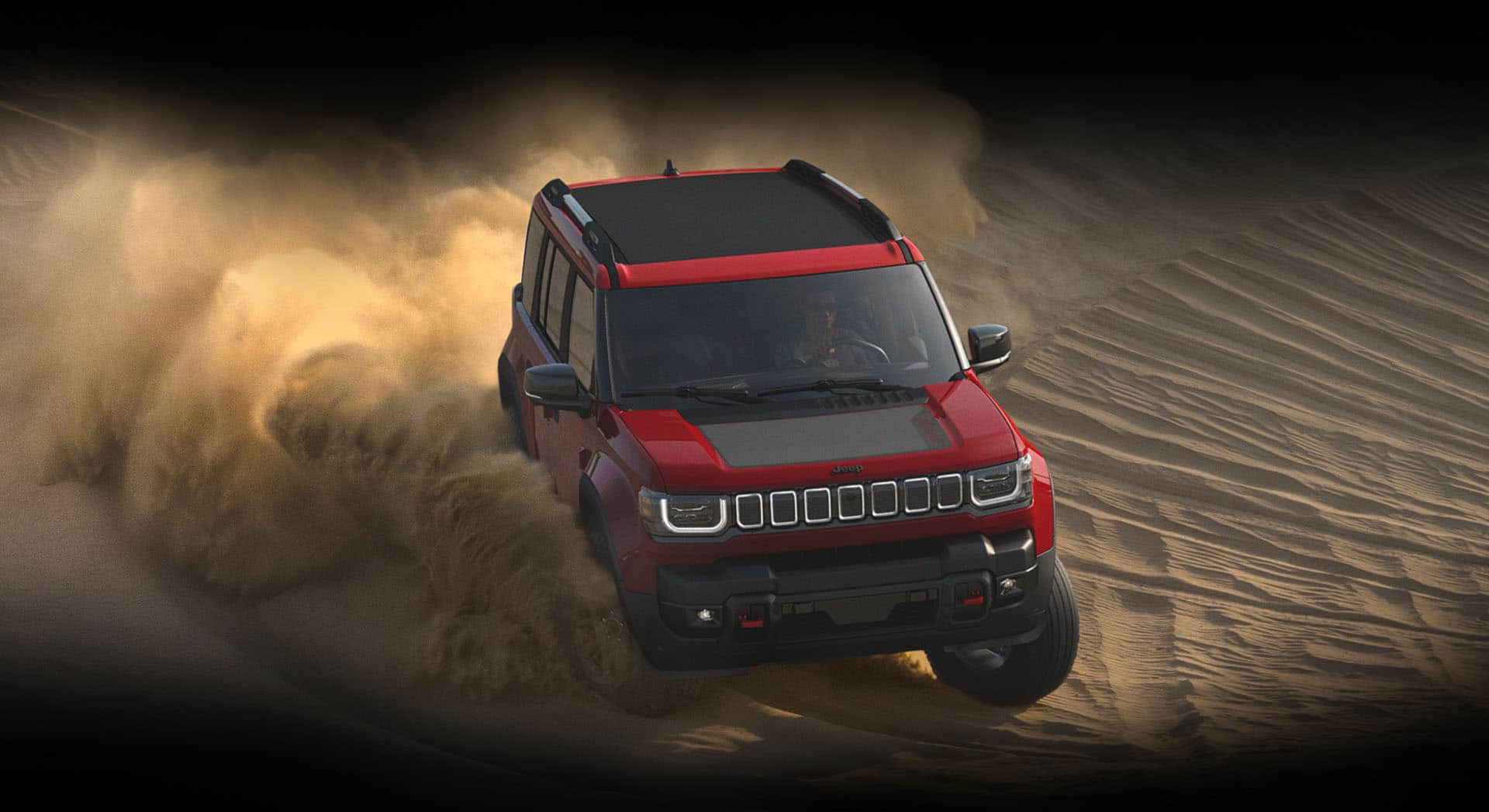
THE ARCHITECTURE FOR NEXT-LEVEL ADVENTURE
With our battery electric vehicles, you’ve got options when it comes to legendary and uncompromising 4x4 capability.

CHARGE IT FORWARD
Adventure goes to great lengths with three simple charging options—Level 1, available Level 2 and Level 3 chargers, typically found at public charging stations. The higher the level, the faster it charges.
ELECTRIFYING AND REWARDING
The benefits of owning a Jeep® Brand battery electric vehicle go beyond the drive. Learn all about available tax credits and warranties.
FREEDOM ROAMS WHERE IT WANTS
When you're taking an all-electric drive, electrified technology puts nearly every adventure in reach.
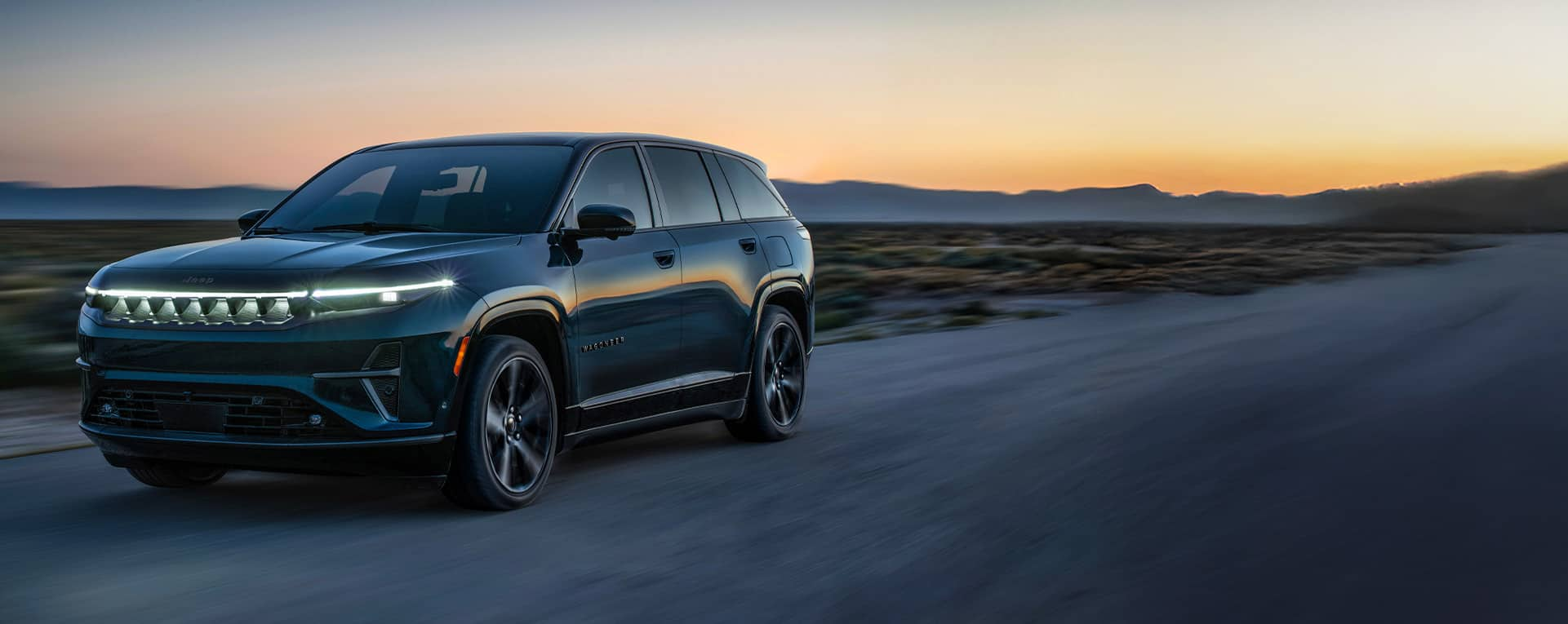
ALL-ELECTRIC WAGONEER S
,ALL-ELECTRIC WAGONEER S
,Sleek premium SUV design, cutting-edge tech and 294 miles of all-electric driving range make the Wagoneer S an electric vehicle that begs to get dirty.
,
ELECTRIC VEHICLE FAQ
An Electric Vehicle (EV) trades a gasoline-powered engine for all-electric motors. Instead of an internal combustion engine (ICE), an EV uses high-powered batteries that are charged to replenish their energy.
Using an electric motor and a rechargeable battery pack, EVs convert electric energy into power for propulsion. Electric motors generate more torque and provide instant acceleration while generating less noise pollution.
No, electric vehicles don’t have a transmission. Electric motors can distribute power to the wheels directly, eliminating the need for multispeed transmissions and accompanying gear shifts. This creates a new driving experience because the electric motor generates more torque through a wide range of RPM.
No, electric vehicles don’t need traditional oil changes. Since they don’t have internal combustion engines, they don’t have as many moving parts that need lubrication via motor oil. However, EVs still require maintenance to keep them performing at their best.
Currently, the Jeep® Brand has two Battery Electric Vehicles, the Jeep® Recon and the Jeep® Wagoneer S. The 2026 Jeep® Recon is the only full electric vehicle with open-air freedom and the only fully electric vehicle to be Trail Rated®, while the Jeep® Wagoneer S is a premium all-electric SUV that delivers a combination of elevated comfort and exhilarating performance.
While charging times differ from vehicle to vehicle, they also depend on the type of charger being used. For example, fully charging the Wagoneer S can take up to 3 days with a Level 1 charger, between 8-10 hours with a level 2 charger or between 15-60 minutes on a Level 3 DC fast charger.
The cost of charging an electric vehicle depends on where you charge it. Generally, charging at home is typically cheaper than using a public charging station. While on longer trips, you’ll need to use a public charger, but these stations can be less expensive than a fill-up of gasoline or diesel fuel.