
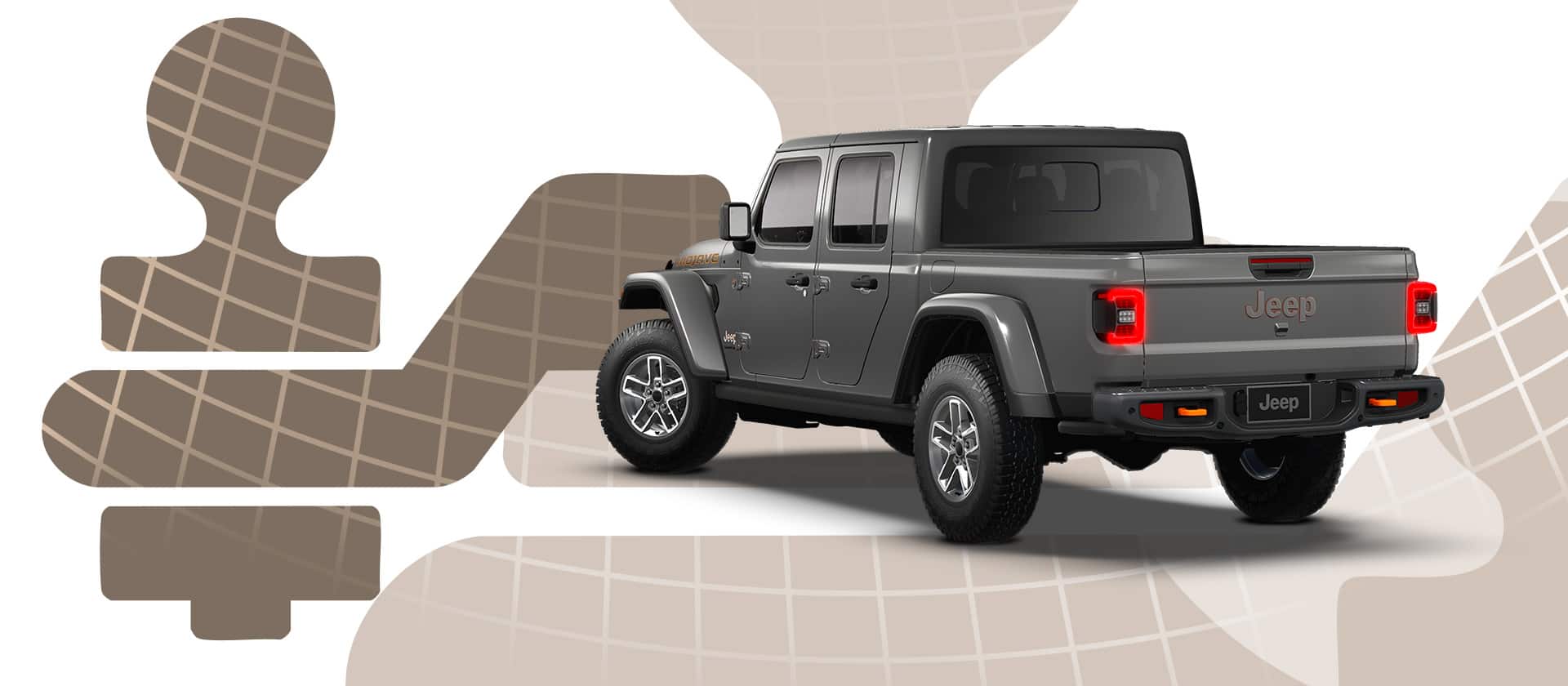

Curb Weight
Your vehicle’s curb weight is how much your vehicle weighs with no one in it. It includes all standard equipment, a full tank of gas and all fluids at their full levels.
Gross Vehicle Weight Rating (GVWR)
The Gross Vehicle Weight Rating is the maximum loaded weight of your vehicle—so, the weight of the vehicle and all cargo and passengers inside of it (including whatever’s in the truck bed, if you’re driving a pickup truck).
Gross Combined Weight Rating (GCWR)
The Gross Combined Weight Rating is the same as the Gross Vehicle Weight Rating, but it also includes the weight of whatever you’re towing behind the vehicle.
Trailer Tongue Weight
The tongue weight is the downward pressure of the trailer tongue on the hitch ball—basically, the weight of the trailer on the hitch ball of your vehicle.
Maximum Towing Capacity
The maximum towing capacity is the maximum weight that can safely be towed by a vehicle.
Trailer Hitch
The trailer hitch is the part of your SUV or truck to which you hook up the trailer you’re towing. Depending on your vehicle configuration, extra upgrades for your trailer hitch can be obtained as part of most vehicle manufacturers’ tow packages, including the Jeep® Brand Trailer Tow Package.
Axle Weight Rating
Your axle weight rating limit is the maximum weight that can be supported by an individual axle. Make sure that the loaded weight of your trailer doesn't exceed this weight rating.
Weight Distribution Hitch
A weight distribution hitch is a trailer hitch that disperses the tongue weight across all of the axles rather than just on the hitch ball. These hitches are important for safe trips if you’re a regular adventure-seeker. find helpful terms and techniques for off-roading here information about your Jeep® Brand off-road vehicle.
Braked and Unbraked Towing Capacity
Some trailers come with their own brakes. Some don’t. Braked towing capacity is how much your vehicle can tow when your trailer has its own brakes. Unbraked towing capacity is how much it can tow when the trailer relies only on your vehicle’s brakes. Good to know: A vehicle can tow heavier items with braked towing capacity.
Tow Hitch Class
Your tow hitch class is the size and type of towing hitch you’ll need depending on what you’re hauling. Class I and II are for lighter towing by cars and small SUVs, while Class III and IV are for larger trucks and SUVs hauling bigger items.
Engine Power
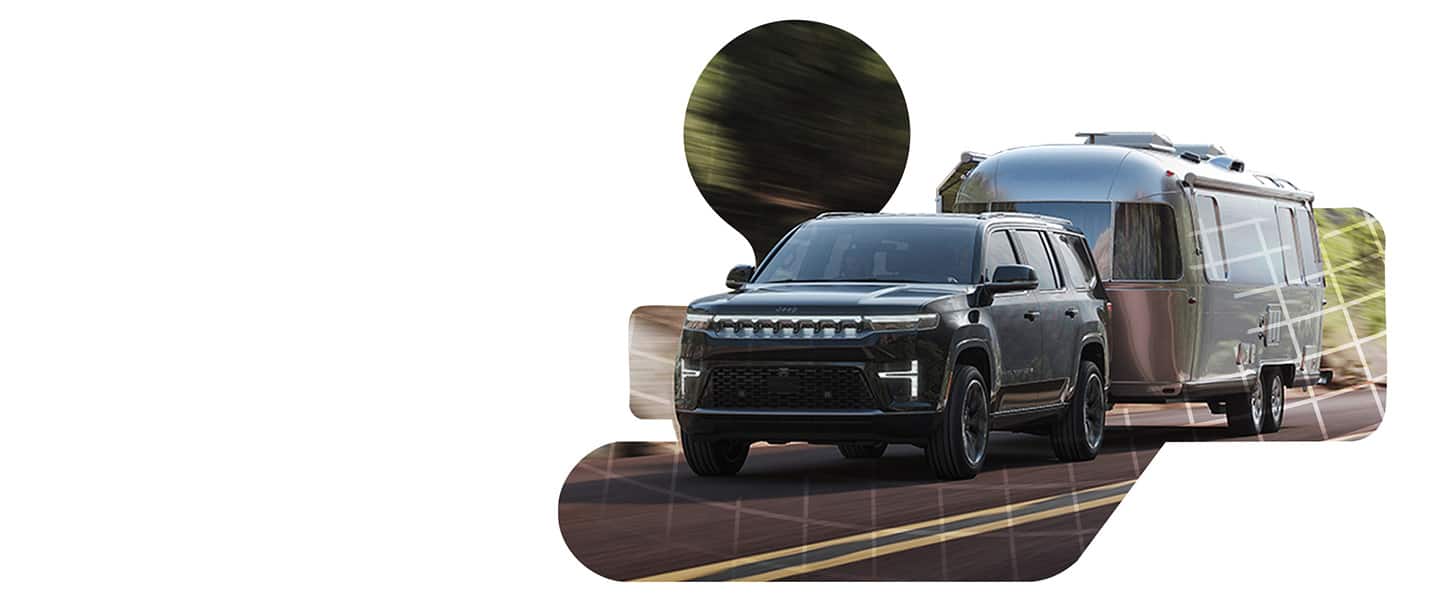
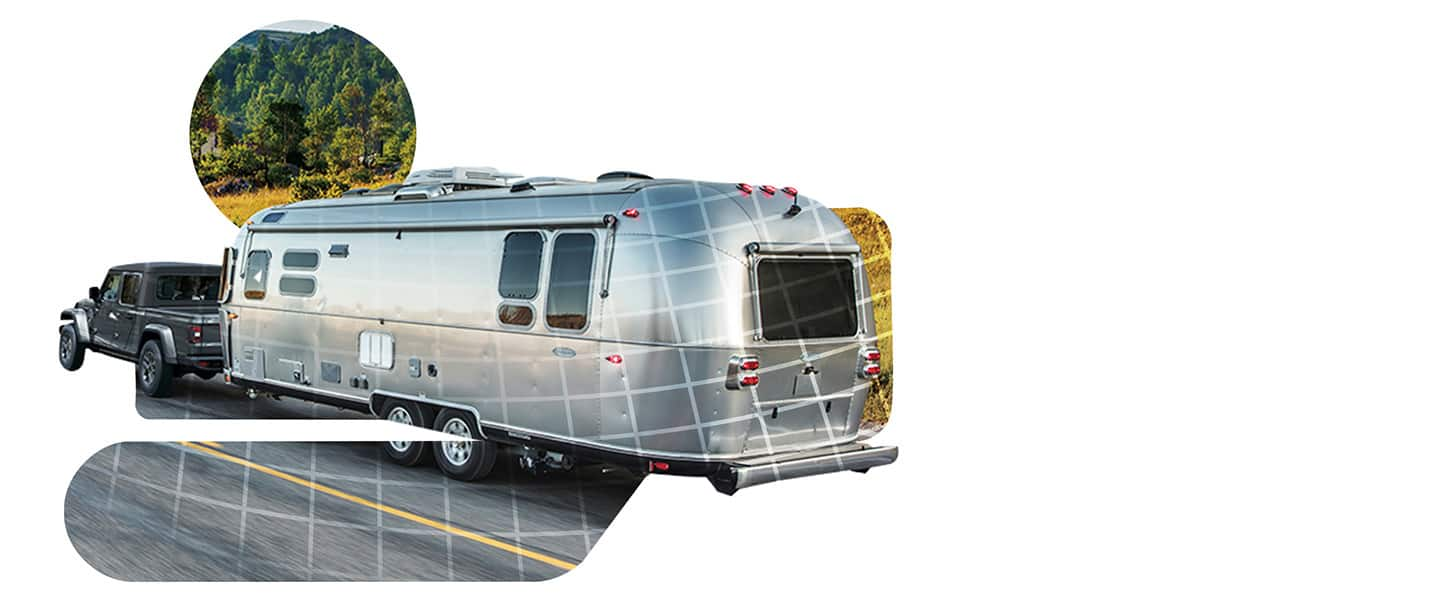
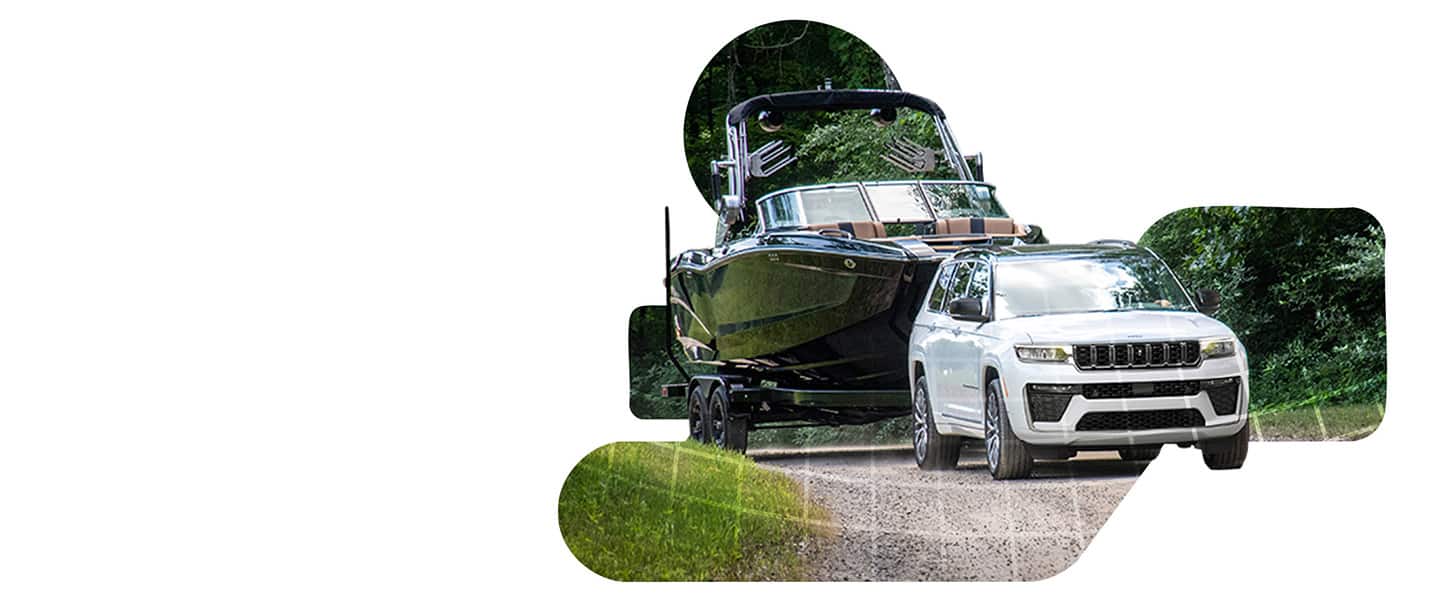
Having a powerful engine is beneficial to towing because it can provide the torque and horsepower needed to haul large loads. Torque is especially important because it helps you accelerate quickly from a stop, which can be difficult for some vehicles carrying heavy cargo or traveling on tough terrain or steep inclines. That said, if you have a lead foot, be careful—it’s important to drive carefully when towing large trailers or cargo.
Suspension
Your suspension helps keep your vehicle level, which in turn affects handling and control when towing. If your suspension isn’t properly aligned, it can lead to trailer sag, sway or diminished capability after braking, which can cause accidents. Enhanced suspensions can better support both your vehicle and your trailer.
Transmission
Imagine your vehicle is like your body. Your transmission is your muscular system—it works extra hard if it’s carrying extra weight, and it needs rest and fluids to stay strong. When you tow heavy loads, make sure your transmission is well maintained and your fluid levels look good.
Payload
Your vehicle's payload is the weight of your cargo and passengers. A lot of the time, you’ll hear this term used in reference to pickup trucks, where the payload includes whatever’s in the truck’s bed (lots of pickup trucks have heavy payload capacities because, well, pickups are often used for carrying heavy stuff). Make sure to clock your payload capacity and look into what that means for the trailer you’re towing.
Vehicle Accessories and Tow Kits
Even if you’re driving a brawny vehicle like the Jeep® Grand Wagoneer, towing reinforcement doesn’t hurt. Contact your dealer, mechanic or vehicle manufacturer about different towing options like the available Trailer Tow Group.
Trailer Sway Control System
Standard on multiple Jeep® Brand vehicles, the Trailer Sway Control System senses when your trailer starts to sway. Then it applies the brakes to each wheel individually until the trailer evens out.
Available 4x Trailer Hitch Zoom
Available as part of our ParkView® Rear Back Up Camera, this feature lets you zoom closely in on your trailer hitch to keep an eye on your vital towing components.
Front and Rear Tow Hooks
Sometimes it’s about pulling a trailer—sometimes it’s just about helping out another vehicle. The 2026 Jeep® Wrangler comes with standard front tow hooks and a standard rear tow hook, while the 2026 Jeep Gladiator sports Segment-Exclusive standard front and rear tow hooks—two in the front, one in the rear.The 2026 Jeep Gladiator Rubicon and Mojave models both have two standard rear tow hooks.
Jeep® Recon
The All-New, All-Electric Jeep® Brand vehicle. Preproduction model shown. Actual production model may vary.
All-New 2026 Jeep® Cherokee
The return of our game-changing SUV, now with a Turbo Hybrid Engine.
Jeep® Grand Cherokee
A spacious SUV for taking your family off the beaten path.
Jeep® Grand Wagoneer
Hefty Jeep® Brand capability in a luxurious full-size SUV.
A Beginner’s Guide to Off-Roading Terms and Techniques
Jeep® Wrangler shown with aftermarket accessories.